
How the May 19 executive order starts a 120-day Federal Reserve clock — and why Ripple was already waiting at the starting line.
Most reporting on President Trump’s May 19 fintech executive order casts it as a broad win for crypto. That’s true, but it misses the real story: what the order activates for the one digital-asset company positioned to use it. For Ripple Labs, the directive — “Integrating Financial Technology Innovation into Regulatory Frameworks” — isn’t a gift. It’s the start of a 120-day clock on a Federal Reserve review that could determine whether the most ambitious banking-integration attempt by any U.S. crypto firm clears its final hurdle by mid-September 2026. The starter gun just fired.[1]
What the Order Actually Requires
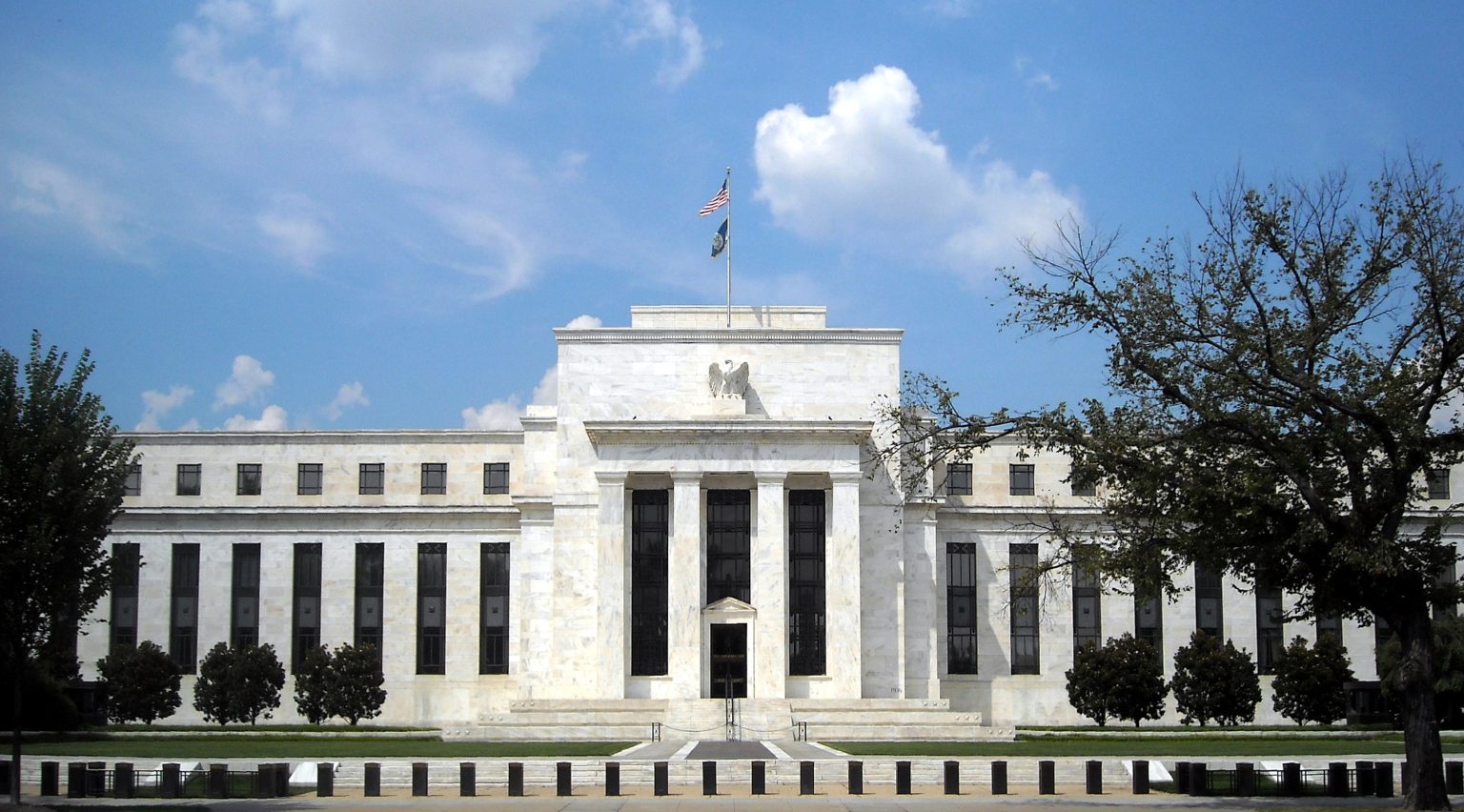
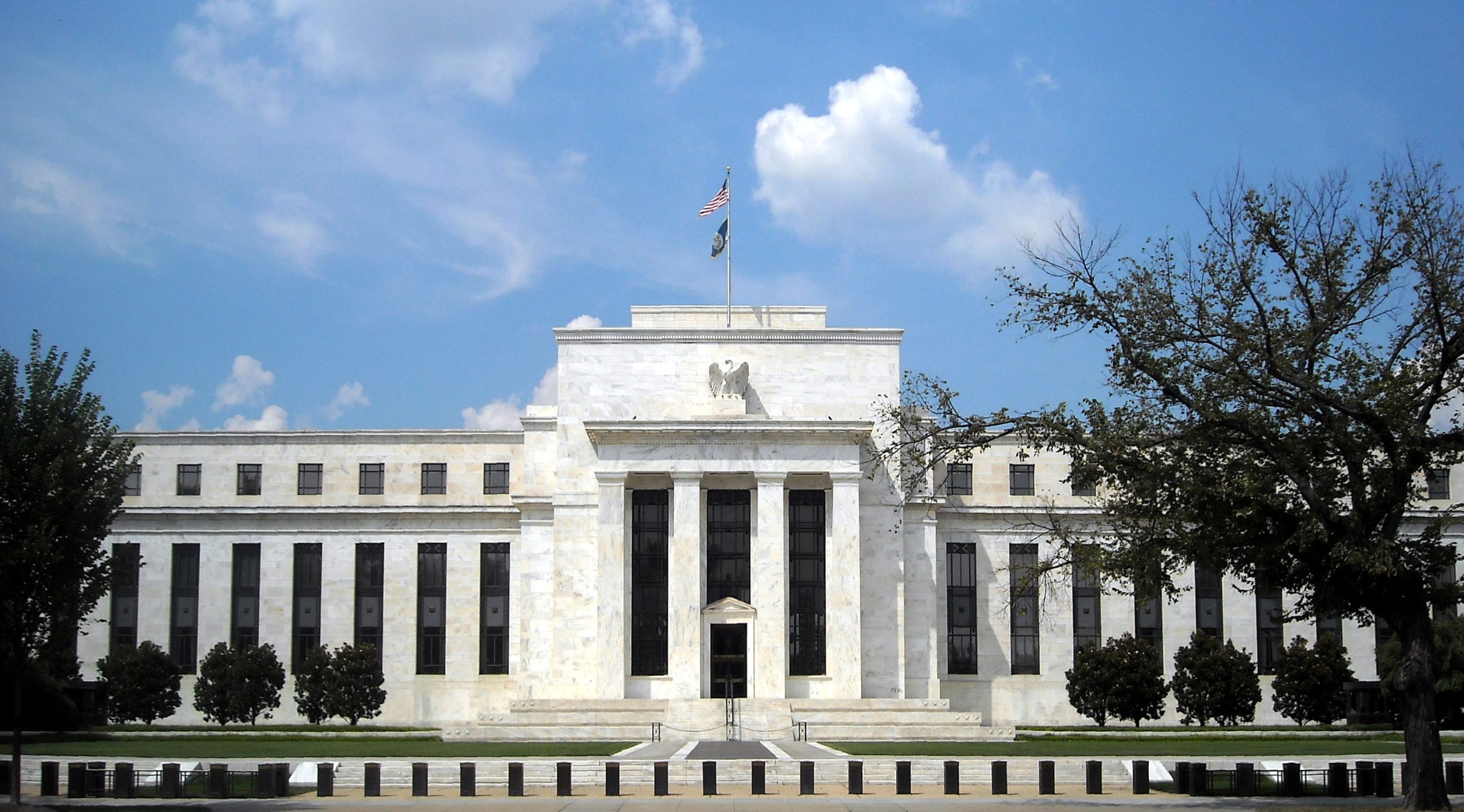
The order directs federal financial regulators to spend 90 days reviewing rules that “unduly impede fintech firms from entering into partnerships with federally regulated institutions,” then 180 days to act on findings, per the White House fact sheet released May 19, 2026. Inside that window sits a more specific 120-day directive: the Federal Reserve must assess its legal authority to grant master accounts and direct payment access to non-bank fintechs and uninsured depository institutions, including digital-asset firms. The order also asks the Fed to evaluate whether the 12 regional Reserve Banks can independently approve master accounts without Board sign-off — a question that could prove decisive for state-chartered crypto banks.[1] Two months earlier, on March 26, 2026, FTC Chairman Andrew Ferguson sent warning letters to the CEOs of Visa, Mastercard, Stripe, and PayPal, citing debanking concerns under Section 5 of the FTC Act. Ferguson anchored the action to Trump’s August 2025 executive order on debanking.[2]
Where Ripple Sits on the Board
Ripple Labs started the long road — the order arrived finding Ripple waiting. On December 12, 2025, the Office of the Comptroller of the Currency granted conditional approval for Ripple National Trust Bank, putting the company among the first crypto-native firms with a federal banking charter pathway.[3] Ripple submitted its Federal Reserve master account application in July 2025, naming Standard Custody — its New York-chartered subsidiary acquired in June 2024 — as the parallel applicant for direct payment-rail access.[4][5]
If the Fed clears either filing, reserves backing Ripple USD (RLUSD), the company’s dollar-pegged stablecoin, could sit at the Federal Reserve itself rather than at commercial bank counterparties. That is a different category of stablecoin than anything currently in the market. RLUSD’s circulating supply remains modest — roughly $1.64 billion as of May 2026, per Ripple’s monthly attestation, compared with approximately $77 billion for Circle’s USDC.[6] But the structural difference, if the master account clears, is the point. A stablecoin with reserves at the central bank does not carry the same counterparty profile as one whose reserves sit at a fractional-reserve commercial bank.
Two Precedents Tell Different Stories
Two recent cases frame the range of plausible outcomes. On March 4, 2026, the Federal Reserve Bank of Kansas City granted Kraken Financial a master account — the first crypto-native firm to receive one, per Kraken co-CEO Arjun Sethi’s announcement that day. The approval came after more than five years of regulatory engagement and was designed as a test case for the “skinny master account” framework Governor Christopher Waller has been working to finalize this year.[7]
The counterweight is Custodia Bank, the Wyoming Special Purpose Depository Institution that has litigated against the Fed since 2023 for the same access. The U.S. District Court for Wyoming ruled against Custodia in March 2024; the Tenth Circuit affirmed that ruling on October 31, 2025, and later denied rehearing en banc.[8] The point: master account approval is not automatic and not legally compelled, even when an applicant looks eligible. The order applies pressure. The Fed still controls the volume.
What Could Still Slow This Down
Several forces could still slow this trajectory. Rep. Maxine Waters (D-CA), ranking member of the House Financial Services Committee, has publicly challenged the Kraken approval and called for greater transparency over Fed master account decisions; she is likely to do the same for any subsequent crypto applicant.[9] The American Bankers Association, Bank Policy Institute, and Independent Community Bankers of America have historically opposed expanding Fed access beyond traditional depository institutions; ICBA pushed back within hours of the May 19 release.[9]
November 2026 midterms could redistribute control of relevant committees. A future administration could reverse the policy direction by executive order or regulatory guidance. As Custodia demonstrated, master account decisions are litigable — banks denied access have sued, and incumbent banks could potentially sue if they believe the approval criteria have been weakened.
What to Watch
The Federal Reserve’s 120-day report is due mid-September 2026. By then, its stance on non-bank master account access — and whether Ripple, Circle, and the rest of the queue clear the bar — should come into sharper focus. Yet whether Ripple wins approval this year may matter less than how it positioned itself as the frontrunner long before Trump signed the EO. That story of deliberate, multi-year strategic moves is worth tracing in full. A follow-up will map the two-year path that put Ripple in pole position.
________________________________________________________________________________
SOURCES
[1] White House, “Integrating Financial Technology Innovation into Regulatory Frameworks,” Executive Order, May 19, 2026. https://www.whitehouse.gov/presidential-actions/2026/05/integrating-financial-technology-innovation-into-regulatory-frameworks/ White House Fact Sheet, May 19, 2026: https://www.whitehouse.gov/fact-sheets/2026/05/fact-sheet-president-donald-j-trump-integrates-financial-technology-innovation-into-regulatory-frameworks/ Federal Register publication as Executive Order 14405: https://www.federalregister.gov/documents/2026/05/22/2026-10399/integrating-financial-technology-innovation-into-regulatory-frameworks
[2] Federal Trade Commission, “FTC Chairman Andrew N. Ferguson Issues Warning Letters to CEOs of PayPal, Stripe, Visa and Mastercard About Debanking American Consumers,” press release, March 26, 2026. https://www.ftc.gov/news-events/news/press-releases/2026/03/ftc-chairman-andrew-n-ferguson-issues-warning-letters-ceos-paypal-stripe-visa-mastercard-about-debanking-american-consumers Section 5 of the FTC Act anchor confirmed: Banking Dive, “Visa, Mastercard, PayPal, Stripe warned of debanking consequences,” March 27, 2026. Underlying executive order referenced in the letters: White House, “Guaranteeing Fair Banking for All Americans,” Executive Order, August 7, 2025. https://www.whitehouse.gov/presidential-actions/2025/08/guaranteeing-fair-banking-for-all-americans/
[3] Office of the Comptroller of the Currency, “OCC Announces Conditional Approvals for Five National Trust Bank Charter Applications,” News Release 2025-125, December 12, 2025. https://www.occ.gov/news-issuances/news-releases/2025/nr-occ-2025-125.html OCC decision letter for Ripple National Trust Bank: https://occ.gov/news-issuances/news-releases/2025/nr-occ-2025-125b.pdf
[4] Ripple Federal Reserve master account application announced via Standard Custody subsidiary, July 2025. Reported: CoinDesk, “Ripple Applies for Federal Bank Charter, XRP Jumps 3%,” July 2, 2025. https://www.coindesk.com/policy/2025/07/02/ripple-applies-for-federal-bank-trust-charter-xrp-jumps-3
[5] Ripple, “Paving a Compliant Path Forward: Ripple Closes Standard Custody Acquisition and Appoints Jack McDonald as Senior Vice President of Stablecoins,” June 11, 2024. https://ripple.com/insights/paving-a-compliant-path-forward-ripple-closes-standard-custody-acquisition-and-appoints-jack-mcdonald-as-senior-vice-president-of-stablecoins/ Initial acquisition announcement: Ripple, February 13, 2024.
[6] RLUSD circulating supply per Ripple monthly attestations (May 2026 reporting period). USDC circulating supply per Circle published data and market trackers (CoinGecko, CoinMarketCap), May 2026.
[7] Federal Reserve Bank of Kansas City, approval of limited-purpose master account for Kraken Financial (Payward Financial), March 4, 2026. Statement from Kraken Co-CEO Arjun Sethi, same day. Also reported: CoinDesk, “Kraken becomes first crypto company to secure Fed master account access,” March 4, 2026. https://www.coindesk.com/business/2026/03/04/kraken-becomes-first-crypto-company-to-secure-fed-master-account-access-wsj Banking Dive, “Kraken receives Fed master account, in a first for crypto,” March 4, 2026. https://www.bankingdive.com/news/kraken-receives-fed-master-account-crypto-skinny-account-custodia/813814/ Skinny master account framework: Federal Reserve Governor Christopher Waller, public remarks, October 2025.
[8] Custodia Bank v. Federal Reserve Board of Governors and Federal Reserve Bank of Kansas City, No. 24-8024 (10th Cir. Oct. 31, 2025). https://law.justia.com/cases/federal/appellate-courts/ca10/24-8024/24-8024-2025-10-31.html En banc denial reported: ABA Banking Journal, “Tenth Circuit denies rehearing en banc in Custodia Bank’s lawsuit over master accounts,” April 2026. https://bankingjournal.aba.com/2026/04/tenth-circuit-denies-rehearing-en-banc-in-custodia-banks-lawsuit-over-master-accounts/ Underlying district court ruling: U.S. District Court for the District of Wyoming, March 2024.
[9] Office of Rep. Maxine Waters, ranking member, House Financial Services Committee, letter to Kansas City Fed President Jeff Schmid regarding Kraken master account approval, sent March 26, 2026. Reported: CoinDesk, “Top Democrat on House committee questions Kraken’s Federal Reserve account,” March 26, 2026. https://www.coindesk.com/policy/2026/03/26/top-democrat-on-house-committee-questions-kraken-s-federal-reserve-account Independent Community Bankers of America, “ICBA Statement on Executive Order on Financial Technology Regulation,” May 19, 2026. https://www.icba.org/w/icba-statement-on-executive-order-on-financial-technology-regulation
Disclosure: The author holds XRP and has no employment, advisory, or compensation relationship with Ripple Labs, Inc. or any other companies or agencies named in this article. AI tools were used for research synthesis and drafting assistance; final framing, judgment, and editorial decisions are the author’s. This article is for informational purposes only and does not constitute financial advice.