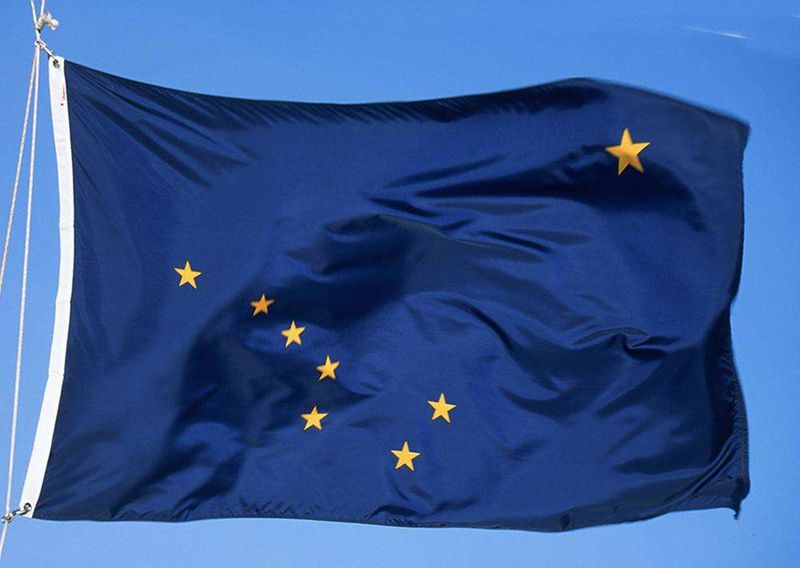

The most consequential Bitcoin reserve bill in Congress carries an Alaska address. On May 21, 2026, Rep. Nick Begich, the state’s lone House member, introduced the American Reserve Modernization Act (ARMA), legislation to establish a U.S. Strategic Bitcoin Reserve and direct the Treasury to acquire up to 1 million BTC, roughly 5% of the total supply.
ARMA is the renamed successor to the BITCOIN Act that Begich and Sen. Cynthia Lummis floated in March 2025, rebuilt for support after the first version stalled. It would impose a minimum 20-year holding period, keep the coins in cold storage, and fund purchases through what proponents call budget-neutral measures, including the Federal Reserve’s surplus and a revaluation of gold certificates. The pitch, in Begich’s framing, is that what a president can do by executive order in four years, Congress can lock in permanently.
Here is what makes the bill land differently from Alaska: the state already runs the closest thing the country has to a sovereign Bitcoin reserve, minus the Bitcoin. The Alaska Permanent Fund held $80.5 billion at the close of fiscal 2024, the largest U.S. sovereign wealth fund, built since 1976 from at least a quarter of the state’s mineral royalties. Every year it pays a dividend to residents. The 2025 payment was $1,000 per eligible Alaskan.
That model is exactly why a sober Alaskan might hesitate at the idea. A fund that cuts a check to every resident cannot easily ride out the 60% to 70% drawdowns Bitcoin has delivered more than once. The Permanent Fund answers to stability and a predictable dividend, not asymmetric upside. A national reserve with a two-decade lockup can stomach volatility a dividend fund cannot. The two ideas borrow the same vocabulary and serve opposite masters.
The Problem Bitcoin Could Actually Touch in Alaska
Strip away the Beltway reserve politics and Alaska’s most grounded crypto use case is far humbler than a Treasury stockpile. It is getting money in and out of places a bank will not go.
Roughly 86% of Alaska communities cannot be reached by road, by federal rural-development data, so cash, goods, and services arrive by plane and barge at a steep markup. Many Alaska Native villages have no bank branch at all. The regional hub of Bethel, which serves 56 surrounding villages in the Yukon-Kuskokwim delta, hosts only three depository institutions. The FDIC’s 2019 survey put the unbanked rate for American Indian and Alaska Native households at 16.3%, the highest of any group it measured.
For a household in a village like Napaskiak or Kwethluk, a dollar-pegged stablecoin that settles on a phone could, in principle, stand in for a money order that otherwise requires a flight to the hub. The savings are not abstract. They are the airfare and the lost day.
The Obstacle Is Bandwidth, Not Code
The grounding here is unglamorous and decisive: connectivity. The same villages without a bank often run on unreliable internet and power. When the signal drops in the delta, card readers and banking apps already fail, which is exactly the failure a digital wallet would inherit. Blockchain rails do not create connectivity. They assume it. A token settles in seconds only where the network reaches, and in much of rural Alaska the network is the binding constraint.
Begich wants the United States to hold a million Bitcoin in cold storage for two decades, a defensible bet on a scarce asset. The question with more daily weight for the state he represents runs the other way: whether the same technology reaches a village on the Kuskokwim before it reaches the Treasury’s vault, and whether Alaska, of all places, recognizes that its harder problem is not storing wealth but moving it the last hundred miles.
Disclosure: The author holds no position in the assets or companies named and has no relationship with them. This article is for informational purposes only and does not constitute financial advice.